
Movie
2025
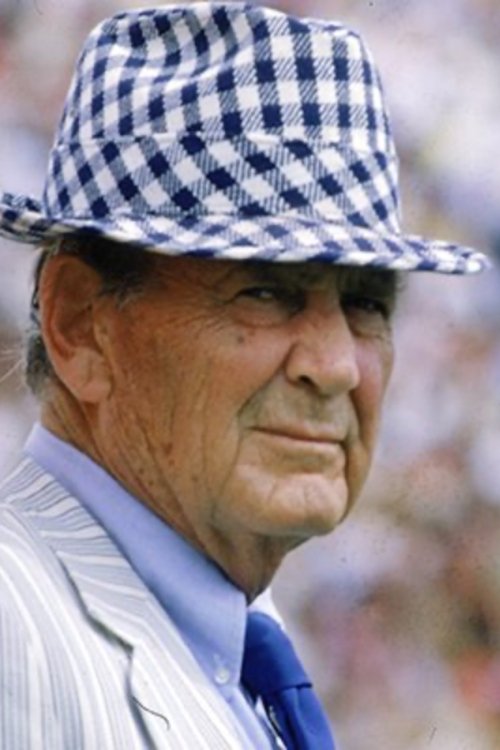
Paul William "Bear" Bryant (September 11, 1913 – January 26, 1983) stands as a towering figure in American college football history. Best remembered for his legendary 25-year tenure as head coach of the Alabama Crimson Tide (1958–1982), Bryant guided his teams to six national championships and 13 conference titles. When he retired in 1982, his 323 career victories set a new benchmark for collegiate coaching. His legacy at Alabama is permanently etched into the campus itself, with the Paul W. Bryant Museum, Paul W. Bryant Hall, Paul W. Bryant Drive, and Bryant–Denny Stadium all bearing his name.
Before his storied return to Tuscaloosa, Bryant had already made his mark as a player for the Crimson Tide and as head coach at Maryland, Kentucky, and Texas A&M. His path to greatness, however, was not without its challenges. For years, critics accused him of failing to integrate Alabama's football program. Bryant had attempted to recruit Black players at Kentucky in the late 1940s, but was blocked by university president Herman Donovan. In Alabama, he faced the formidable opposition of segregationist Governor George Wallace. Yet Bryant persevered, eventually convincing the administration to allow integration. In 1970, Wilbur Jackson signed as Alabama's first Black scholarship player, followed by John Mitchell, who became the first Black player to take the field in 1971. Both excelled on and off the field, opening doors for future generations. By 1973, a third of Alabama's starters were Black, and Mitchell made history again as the Tide's first Black coach.